Tinieblas
Arts & Stage
Kaaistudio's
About this event
Location
Organizer details
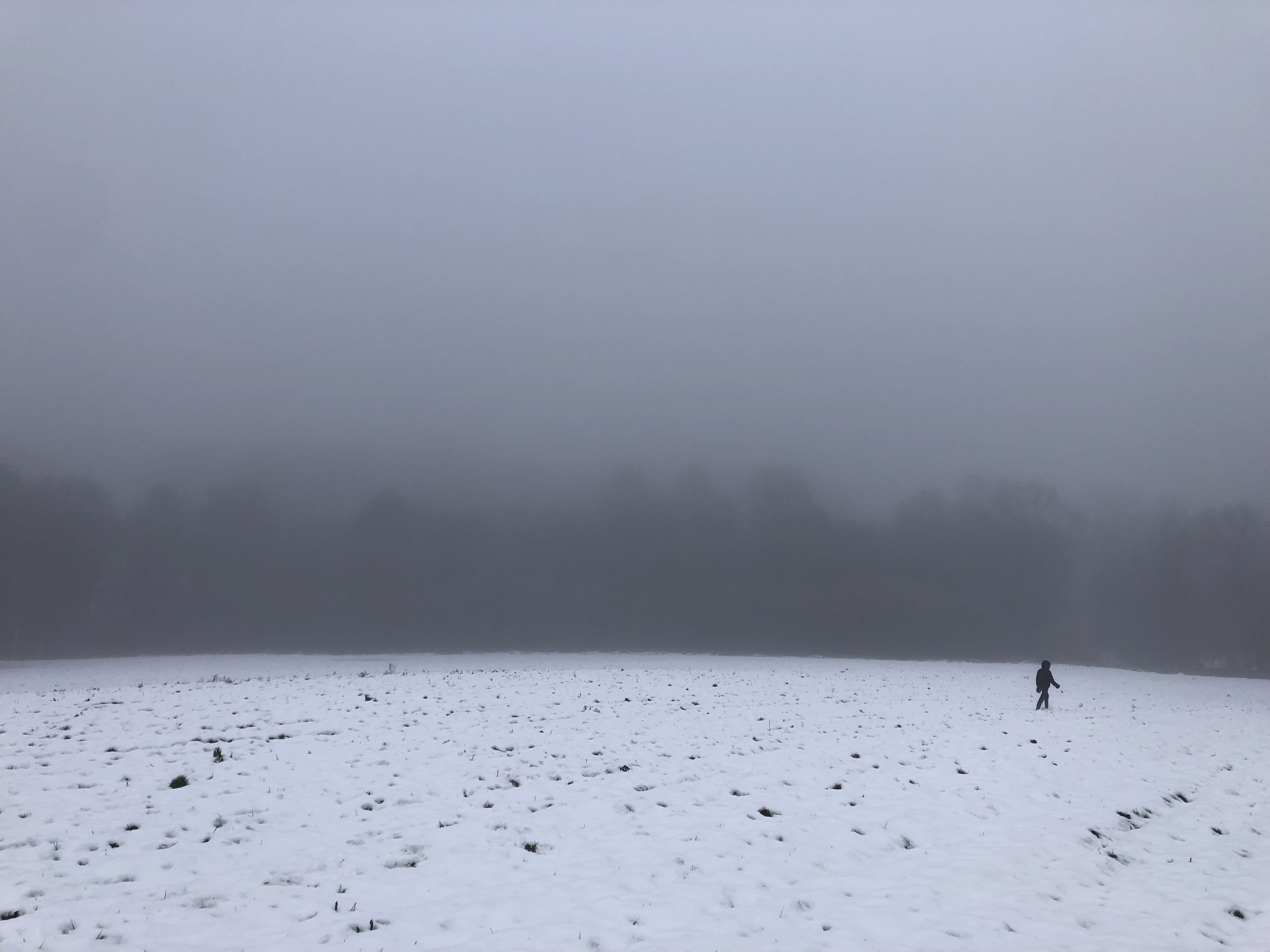
Everything on our continent has been mapped out: forest paths are signposted, routes described precisely in travel guides. Connected to thousands of satellites orbiting our planet, we find our way without looking around us. Where and how can we get lost today? How about in the theatre? A polyphonic story that mimics real events. Or are they situations that have existed only in our collective imagination: legends, stories, rumours...? A performance between the slowness of the walking human and the dizzying speed of the imagination. In Spanish, ‘Tinieblas’ means something like ‘lack of light’. It also contains the word ‘nieblas’, which in turn means ‘mist’ or ‘fog’. Niebla is also the name of the birthplace of Edurne Rubio’s grandfather. In her performance, she presents a collection of tales about people who get lost.A polyphonic story that mimics real events. Or are they situations that have existed only in our collective imagination: legends, stories, rumours...? We live on a continent that has been fully mapped out. Forest paths are signposted and routes described precisely in travel guides. Connected to thousands of satellites orbiting our planet, we find our way without really looking at the world around us. Where and how can we get lost today? How about in the theatre?Tinieblas is a performance in which the audience gets lost, is found again, and gets lost once more. The theatre becomes the centre of an area, a place with its own geographical coordinates. At the same time, the spectators form a single, distinct body in motion, like the murmur of starlings. It is a sensory experience that constantly maintains the tension between inside and outside, between the slow pace of a walking human and the dizzying speed of the imagination, capable of teleporting us in the blink of an eye. • As a visual artist working with a wide range of media and formats, Edurne Rubio (Burgos, 1974) presents her work in a variety of contexts: in theatres, film festivals, exhibitions, and public spaces. She creates situations that generate tension between what we see and what we hear, moving within them between the present, memory, and imagination. With her strong fascination for oral storytelling, she constructs collective narratives from individual stories, offering a subjective reading of history – one shaped by emotion, in constant flux.Her new work for the theatre, Tinieblas (2026), builds on the research she conducted in A Nublo (2021), performances about natural phenomena created in collaboration with artist Maria Jerez, as well as in Light Years Away (2016), about the darkness of caves, which she has presented in a variety of European theatres, including Kaaitheater.During the making of Tinieblas, Edurne Rubio made a film called Los huesos no flotan (2026), which was shown at Wiels as part of Europalia España.
Comments
Loading comments...
Sign in to join the conversation.