New room on the restoration of Victor Horta's studio house
Museums & Expos
Horta Museum
About this event
Location
Organizer details
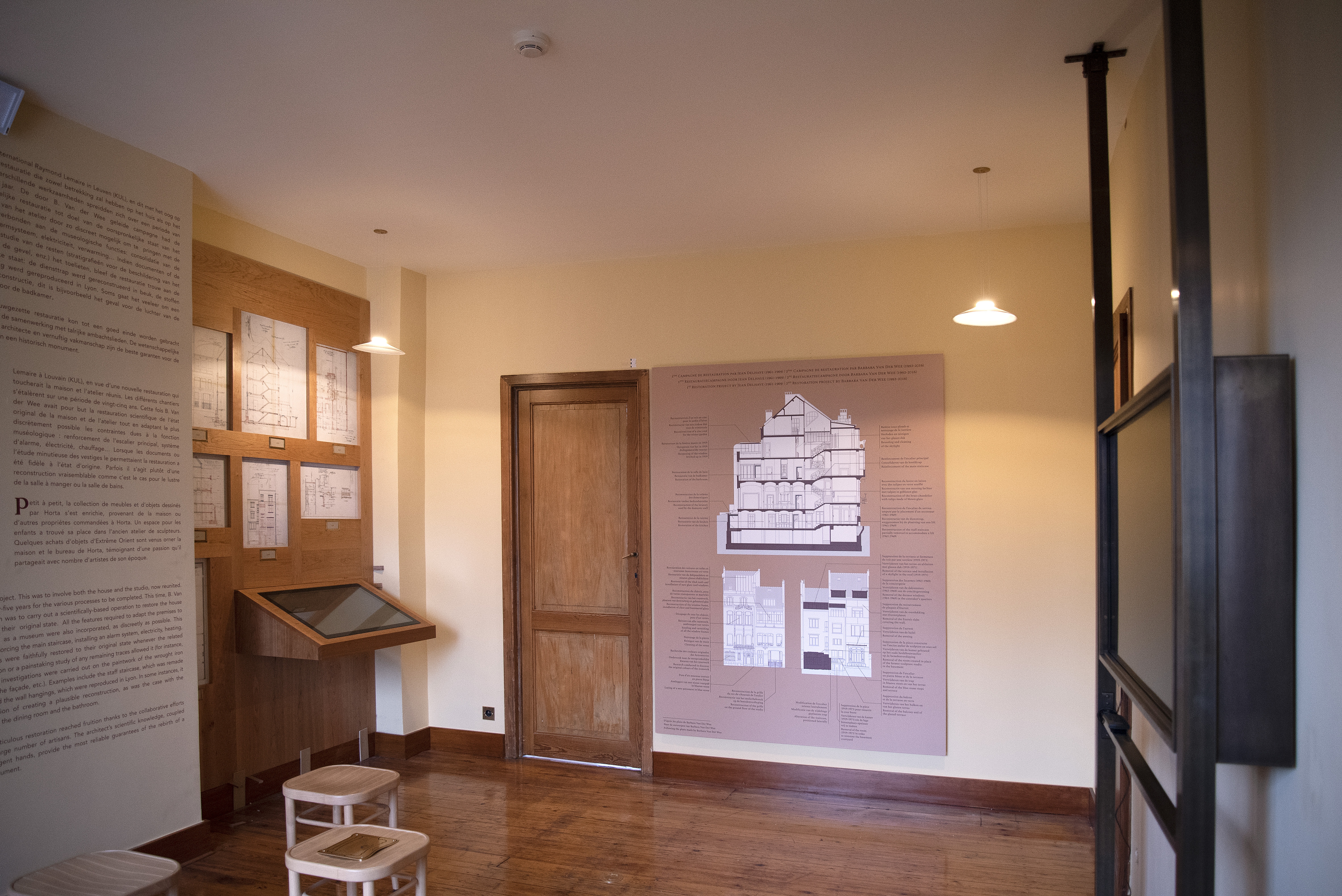
From 4 February onwards, you can discover the history of the museum's restoration since 1961 in the second drawing studio! This room, refurbished thanks to the support of the Baillet Latour fund, will be incorporated into the permanent Museum tour. Thanks to the support of the Baillet Latour Fund, the Horta Museum continues to provide its visitors with access to new areas within the house-cum-studio. Following the opening of the sewing room and darkroom (2018), and the top floor of the house (2019), the first drawing studio was opened in 2020; situated on the second floor of the studio building, it contains Victor Horta’s collection of plaster casts. This year, the second drawing studio, located on the same floor, will also be open to the public ! In this unostentatious room, which was originally occupied by a team of draughtsmen, visitors will be able to learn about the history of the restoration of this house-cum-studio. This room will be incorporated into the Museum tour. On his return from America after the First World War, Victor Horta left his home and his studios and put both buildings in the Rue Américaine up for sale, moving into a house in the Avenue Louise. The two buildings were divided and the studio became a single family home. Forty years later, the municipality of Saint-Gilles bought the house (1961). Work on the layout and restorations were carried out by Jean Delhaye, one of Victor Horta’s former students and a champion of his cause. Later, in 1989 and 2014, the second restoration project took place. This was directed by the architect Barbara Van der Wee, together with Françoise Aubry, the Museum’s Curator, whose story of the restoration process was awarded the Europa Nostra prize in 2014. Through an animated film, the most iconic restoration operations are described in a highly effective and poetic manner, given the complexity of the numerous successive stages involved. It is possible to study this from a more technical angle by analysing and comparing the plans drawn up by Horta, from the first building permit filed in 1898 to the transformations carried out in 1906 and 1908. The longitudinal cross-sections and elevations of the four façades enable us to visualise the spaces that were transformed and restored during the two restoration projects, and they explain the development of elements that were added, dismantled and reconstructed. In addition to using the film, plans and texts, the aim was also to give this history a tangible quality. Thematic colour charts have therefore been created, displaying the rich palettes of tones and textures to be found in the Museum. These make it easier for visitors to visualise the range of hues used by Horta and to appreciate the refined character of the house. Each restoration project also brought together professional artisans and restorers, both men and women, who worked behind the scenes. The house-cum-studio has benefitted greatly from their skills and talents. Their portraits are displayed on the end wall as an additional reminder of the importance of expert craftsmanship.
Comments
Loading comments...
Sign in to join the conversation.